Liquid Calories: How You Can Unknowingly “Drink” Your Daily Calorie Intake
Many people count the calories in their meals but completely overlook what they drink. A cappuccino with syrup, freshly squeezed juice, sweet yogurt, or a glass of wine can quietly add hundreds of calories to your daily diet. Discover why liquid calories often fail to keep you full and how they can interfere with your weight-loss goals.
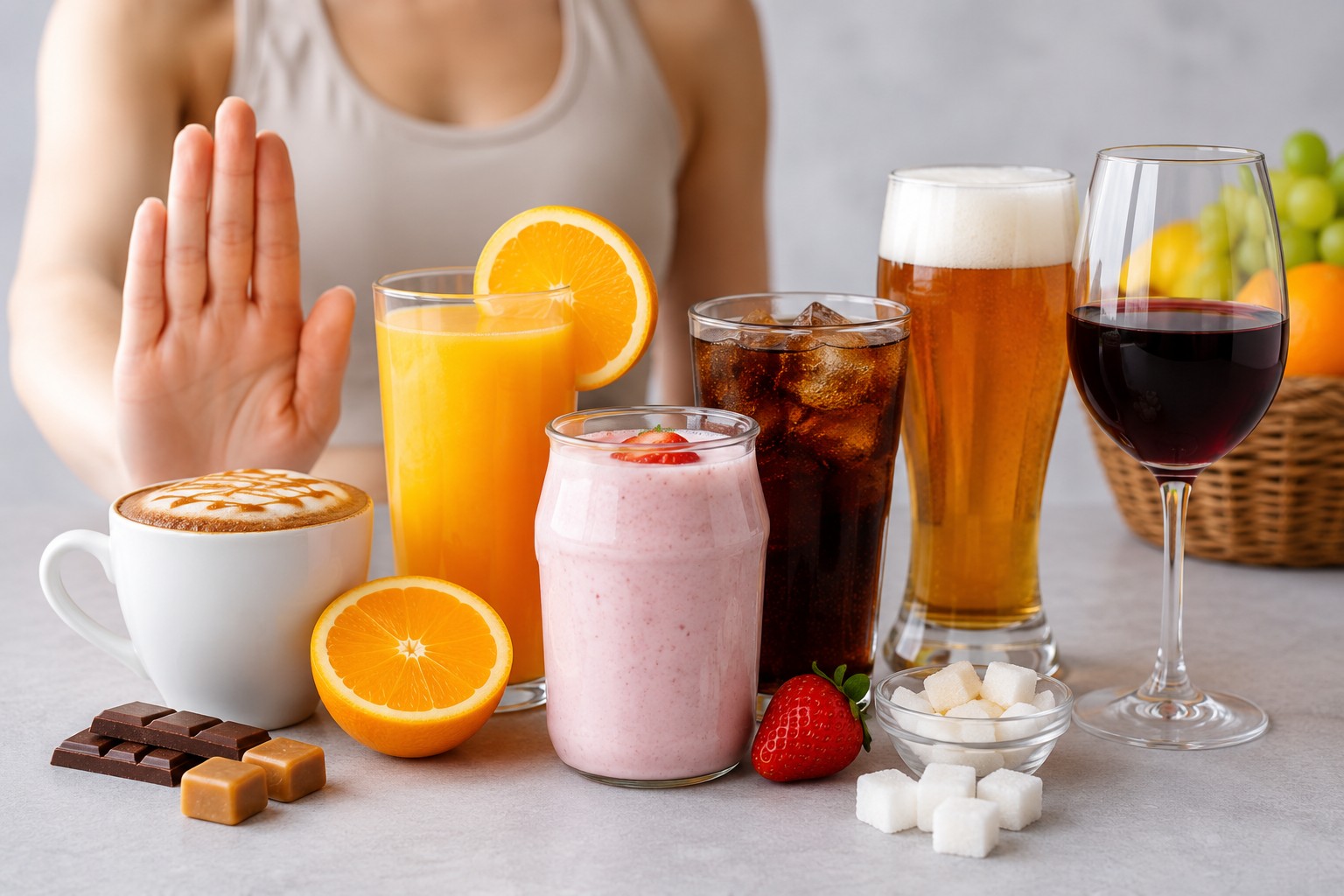
Many people pay close attention to what is on their plate but rarely think about what is in their glass. This is why liquid calories often become one of the main reasons why weight loss stalls or body weight gradually increases.
At first glance, everything seems harmless: a morning cappuccino with flavored syrup, a glass of freshly squeezed orange juice, a sweet drinkable yogurt between meals, kvass on a hot day, or a glass of wine in the evening. The problem is that the body receives energy, but the brain does not always recognize these drinks as real food.
Why Are Liquid Calories So Deceptive?
Our bodies have a complex system for regulating hunger and satiety. When we eat solid foods, several mechanisms work together: chewing, stomach expansion, slower digestion, and the gradual absorption of nutrients.
With beverages, the situation is different. Numerous studies show that calories consumed in liquid form are often less filling than the same number of calories from solid foods. As a result, a person may drink a high-calorie beverage and then feel hungry again shortly afterward, eating their usual meal anyway. Consequently, total daily calorie intake increases almost unnoticed.
It is important to understand that liquid calories are not inherently “special” or “harmful.” The main issue is that they are very easy to underestimate, making it easier to exceed your daily calorie needs.
How Many Calories Can You Drink in a Day?
Let's look at a typical day:
A 400 ml cappuccino with syrup — approximately 250–350 kcal
A 250 ml glass of orange juice — approximately 100–120 kcal
A drinkable fruit yogurt — 150–250 kcal
A 500 ml bottle of kvass — approximately 180–250 kcal
Two glasses of wine — another 250–300 kcal
Altogether, it is easy to consume more than 900–1,200 kcal. For many women, this already represents more than half of their daily energy requirements.
The most surprising part? Most people do not even consider these calories as food.
Freshly Squeezed Juice: Healthy but Not Free of Calories
Freshly squeezed juices are often viewed as a “healthy choice.” To some extent, this is true, as they contain vitamins and various bioactive compounds.
However, there is an important detail. During the juicing process, most of the fiber is removed. Fiber helps slow the absorption of sugars and promotes a feeling of fullness. As a result, a glass of juice affects the body quite differently from eating a whole fruit.
For example, it takes several oranges to produce 250 ml of orange juice. Eating all those oranges at once is much harder than drinking a glass of juice in just a few minutes.
Coffee Drinks: Dessert in Disguise
Black coffee contains virtually no calories. However, the situation changes dramatically when syrups, cream, ice cream, caramel sauces, or whipped cream are added.
Some popular coffee beverages can contain as many calories and as much sugar as a full dessert. People often believe they are simply drinking coffee when, in reality, they are consuming an additional snack.
Alcohol: A Double Problem
Alcohol provides about 7 kcal per gram, making it almost as calorie-dense as fat.
In addition, alcohol can reduce appetite control. This is why, after a few glasses of wine or beer, people often crave extra snacks, chips, or fast food. As a result, they consume not only the calories from the drink itself but also additional calories from food.
What About Smoothies?
Smoothies are often grouped together with juices, but there is an important difference.
If a smoothie is made with whole fruits, berries, vegetables, a source of protein, and contains fiber, it can be quite filling. In this case, a person receives not only natural sugars but also dietary fiber, which helps regulate appetite. However, even a healthy smoothie is still a source of calories and should be included in your daily calorie intake.
How to Control Liquid Calories Without Strict Restrictions
There is no need to completely give up your favorite beverages. Instead, follow a few simple guidelines:
Drink more plain water.
Choose coffee without flavored syrups or reduce the amount used.
Prefer whole fruits over fruit juices.
Read the ingredient labels of drinkable yogurts and milkshakes carefully.
Include alcohol calories in your daily calorie calculations.
Remember that any calorie-containing beverage is part of your diet, not a “free bonus.”
Conclusion
Liquid calories are not the enemy of health or weight loss. The real problem is that they can significantly increase your overall calorie intake without you even noticing. Glass after glass, sip after sip, you can easily consume hundreds of extra calories without feeling truly satisfied.
So if your weight loss has stalled or your progress has slowed down, it may be worth looking not only at what is on your plate but also at what you drink throughout the day. Sometimes, that is exactly where the hidden calories are.