The Anatomy of Satiety: Why Plate Volume Matters
It turns out that feeling full is not determined by calories alone. Your brain evaluates portion size, while your stomach responds to food volume. That is why vegetables rich in water and fiber can keep you satisfied for longer without adding excess calories. In this article, we explore how the satiety mechanism works and why a properly balanced plate can become one of your best tools for appetite control and maintaining a healthy weight.
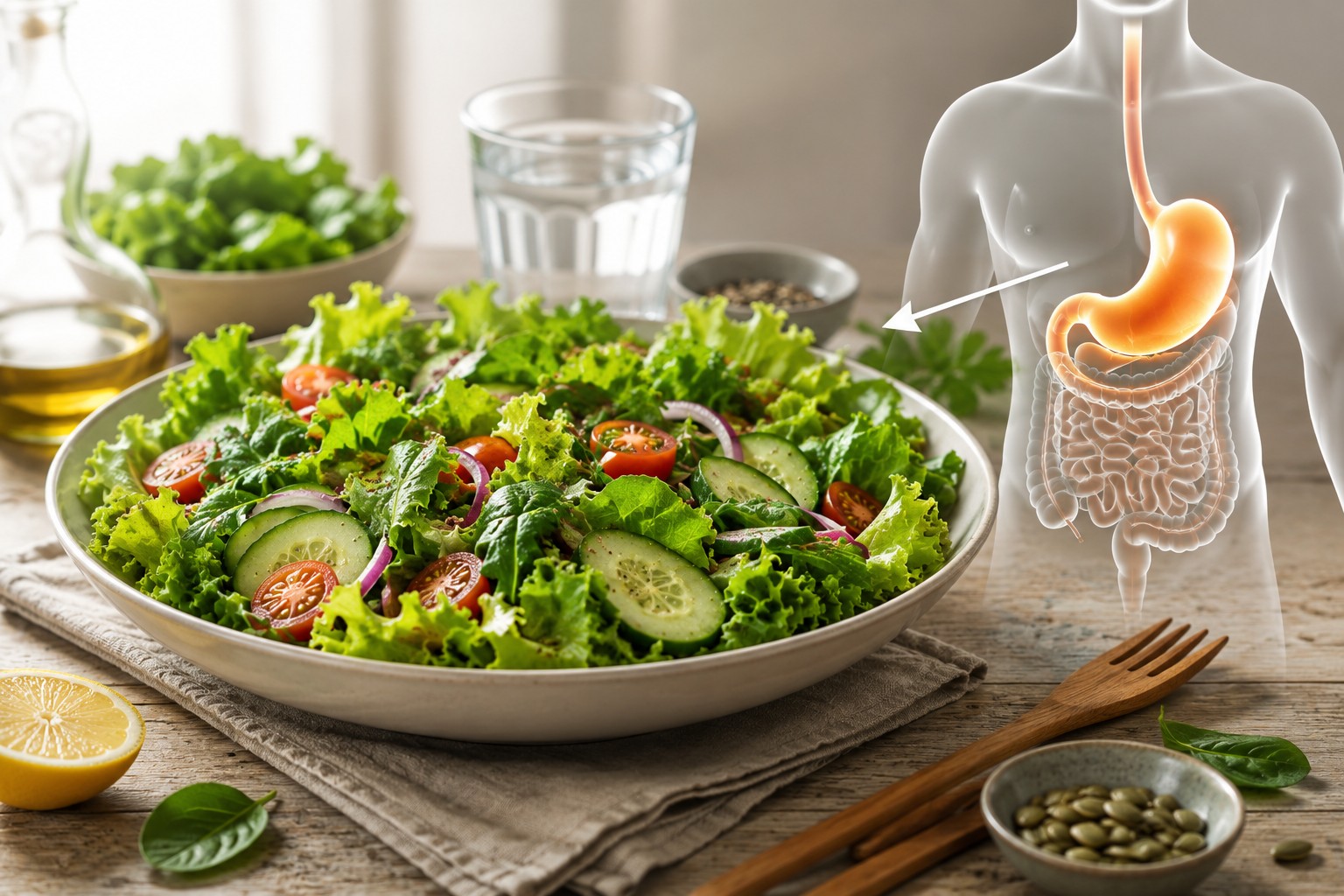
Many people believe that feeling full depends solely on the number of calories consumed. In reality, our bodies are far more complex. The feeling of satisfaction after a meal is influenced not only by calories but also by portion volume, food composition, and even the way a meal looks on the plate.
That is why a large bowl of vegetable salad can be more filling than a small slice of cake with the same calorie content.
How the Brain Evaluates Fullness
During a meal, the brain receives signals from several sources at the same time:
Stomach receptors that respond to stretching;
Satiety hormones produced in the intestines;
The eyes, which assess portion size;
Taste receptors.
Interestingly, the first signals of fullness appear before nutrients are fully absorbed. This means that the visual volume of food plays a much greater role than many people realize.
When a large portion is served on a plate, the brain perceives it as more satisfying, even if it contains relatively few calories.
Why Vegetables Help You Eat Less
Green vegetables contain large amounts of water and fiber. These components create volume without significantly increasing calorie content.
Examples include:
Lettuce;
Cucumbers;
Zucchini;
Broccoli;
Spinach;
Celery;
Cabbage.
A large plate of such a salad may weigh 300–400 grams while containing only 60–120 calories, depending on the dressing.
For comparison, a small chocolate bar may contain 200–250 calories but takes up much less space both on the plate and in the stomach.
The Role of Fiber in Satiety
Fiber is a type of plant-based carbohydrate that is not fully digested in the small intestine.
It helps to:
Slow stomach emptying;
Stabilize blood sugar levels;
Prolong feelings of fullness;
Support a healthy gut microbiome.
This is why a green vegetable salad often keeps hunger away longer than foods rich in refined carbohydrates.
A Brain Trick That Actually Works
There is a psychological effect that influences almost everyone: we tend to judge food by its volume.
When vegetables occupy half of the plate, the meal appears larger and more satisfying. As a result, people often feel more content after eating, even when the total calorie content remains moderate.
This is why dietitians frequently recommend starting lunch or dinner with a generous serving of vegetables. Doing so naturally reduces the intake of more calorie-dense foods without strict restrictions.
The Ideal Formula for a Satisfying Plate
To stay full longer, aim for the following balance:
🥗 50% of the plate — vegetables and leafy greens;
🍗 25% of the plate — protein sources (meat, fish, eggs, cheese, legumes);
🍚 25% of the plate — complex carbohydrates (whole grains, whole-grain bread, potatoes).
This approach provides an optimal balance of volume, nutrition, and long-lasting satiety.
Can High-Volume Foods Help with Weight Loss?
Yes. Numerous studies suggest that foods with a low energy density (few calories relative to their volume) can help control appetite and reduce overall calorie intake throughout the day.
As a result, people feel less hungry and find it easier to maintain healthy eating habits without the sensation of being on a restrictive diet.
Conclusion
Satiety is about more than just calories. The brain pays attention to the volume of food, while the stomach responds to its physical size. That is why a large serving of green vegetable salad is one of the simplest ways to make meals more satisfying: it takes up significant space in the stomach, provides valuable fiber, and helps you stay full longer without excess calories. Sometimes the secret to appetite control is not eating less, but filling your plate more wisely.