The Cooked Food Trap: Why It’s Important to Track Macros Using Raw and Dry Weights
Why isn't 100 g of cooked rice the same as 100 g of dry rice? And why does baked meat weigh less even though it contains almost the same amount of protein? In our latest article, we explore one of the most common mistakes people make when counting calories and macros. Learn how food weight changes during cooking and why tracking protein, fat, and carbohydrate intake using raw or dry weights is the most accurate approach.
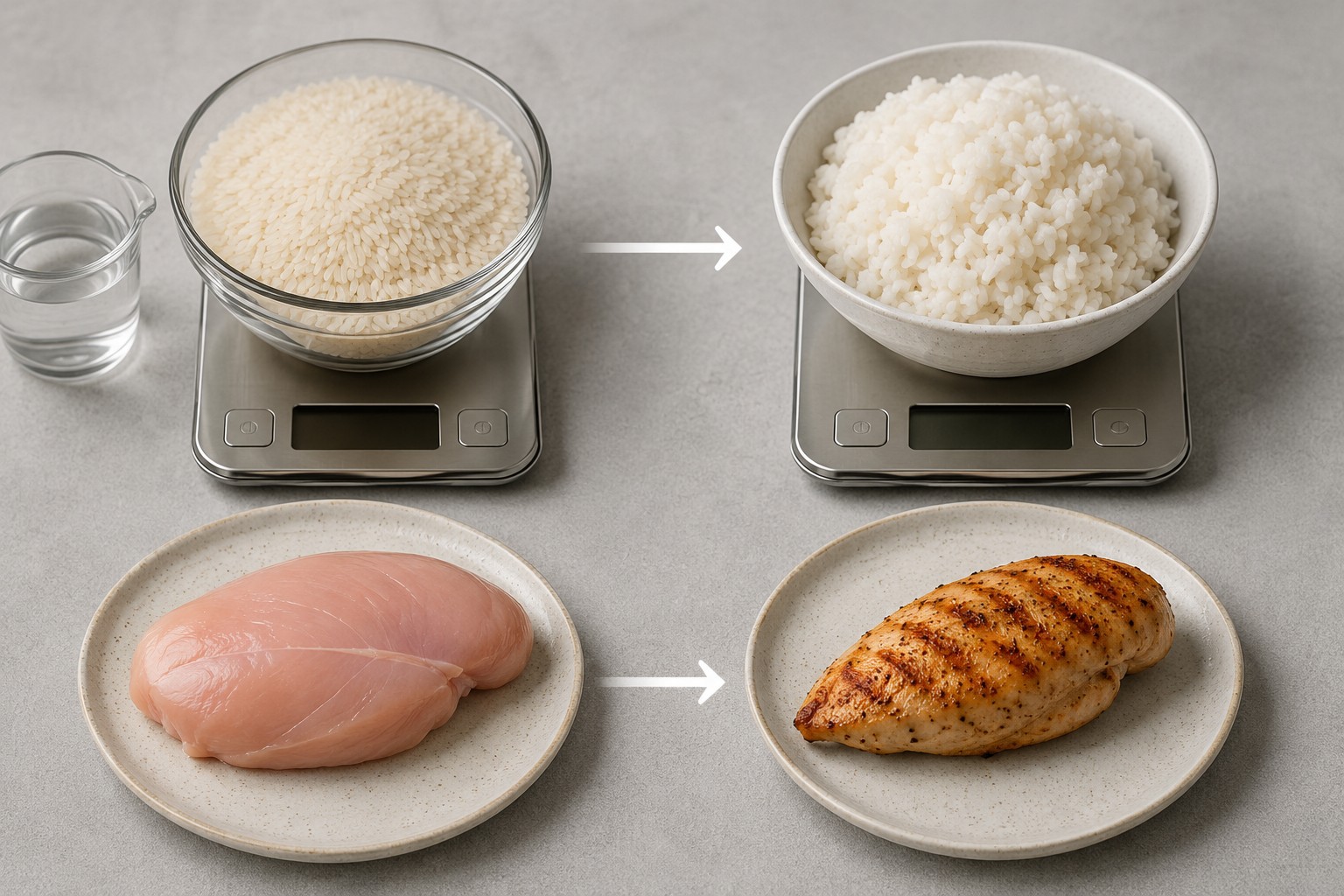
Many people who start monitoring their diet, counting calories, or following specific protein, fat, and carbohydrate targets make the same mistake — they weigh foods after they have been cooked. At first glance, this seems practical and convenient, but this approach often leads to inaccurate calculations and can slow progress toward nutrition and fitness goals.
Why Nutritional Values Are Listed for Raw Foods
Calorie and macronutrient data in most official food composition databases and on product labels are provided for foods in their raw or dry state. This is because cooking primarily changes the amount of water in a product rather than its total protein, fat, or carbohydrate content.
For example, 100 grams of dry buckwheat contain approximately the same amount of nutrients whether it is cooked until fluffy or prepared with more water to achieve a softer texture.
That is why tracking macros based on raw weight is considered the most accurate and universal method for managing dietary intake.
How the Weight of Grains Changes After Cooking
Most grains absorb a significant amount of water during cooking, increasing their weight by two to three times, and sometimes even more.
Approximate values are as follows:
100 g of dry buckwheat yields about 250–300 g of cooked buckwheat;
100 g of dry rice becomes approximately 280–320 g of cooked rice;
100 g of dry bulgur produces around 220–250 g after cooking;
100 g of rolled oats can weigh 250–300 g once prepared.
However, the total number of calories and macronutrients does not increase. Only the product's weight changes due to water absorption.
For example, if 100 grams of dry rice contain around 360 kcal, those same 360 kcal will be distributed across approximately 300 grams of cooked rice. If this factor is ignored and calculations are based solely on the cooked weight, the margin of error can become quite significant.
What Happens to Meat During Cooking
Unlike grains, meat loses part of its water content during frying, baking, grilling, or stewing.
Depending on the cooking method and the type of meat, weight loss can range from 15% to 35%.
For example:
200 g of raw chicken breast may weigh approximately 150–165 g after baking;
200 g of beef often becomes 140–160 g after frying;
fish can also lose between 10% and 25% of its original weight.
At the same time, the amount of protein in the product remains virtually unchanged. What changes is its concentration per 100 grams of the cooked product due to moisture loss.
This is why 100 grams of cooked chicken breast are not nutritionally equivalent to 100 grams of raw chicken breast.
Why This Is Especially Important When Tracking Fat Intake
If your primary goal is weight loss, body recomposition, or maintaining a precise macronutrient ratio, small calculation errors can accumulate over time.
This is particularly important for dietary fat, as fat contains the highest energy density of all macronutrients — 9 kcal per gram.
For instance, someone may believe they consume 50 grams of fat per day, while inaccurate measurements of cooked foods may increase actual intake by 10–15 grams. This translates into an additional 90–135 kcal daily, which can affect long-term results.
For athletes, individuals in a cutting phase, those building muscle mass, or anyone working on improving body composition, such discrepancies can have a meaningful impact.
How to Track Macros Correctly
The simplest and most accurate approach is:
Weigh grains, pasta, legumes, and similar foods in their dry form.
Weigh meat, fish, and poultry before cooking.
Track added oils, sauces, and other ingredients separately.
If preparing multiple servings, calculate the nutritional value of all raw ingredients first, then divide by the number of portions.
Use information from reliable sources, such as official food composition databases or manufacturers' nutrition labels.
Conclusion
Cooked foods can be misleading when it comes to calorie and macronutrient tracking. Grains absorb water and increase significantly in volume, while meat loses moisture and becomes lighter.
To monitor nutrition accurately, avoid common mistakes, and consistently move toward your goals, it is best to base calculations on raw or dry food weights. This method provides more reliable results, simplifies meal planning, and allows for a more objective assessment of progress.