The Essential Grocery List for a Modular Menu: What Should Always Be in Your Fridge
What should always be in your refrigerator to avoid random snacking and prepare complete meals in just 10 minutes? Discover the essential grocery list for a modular menu: eggs, Greek yogurt, poultry, fish, mozzarella, greens, whole-grain crispbreads, and grains. A simple collection of staple foods that makes balanced eating easy and sustainable without complicated meal planning.
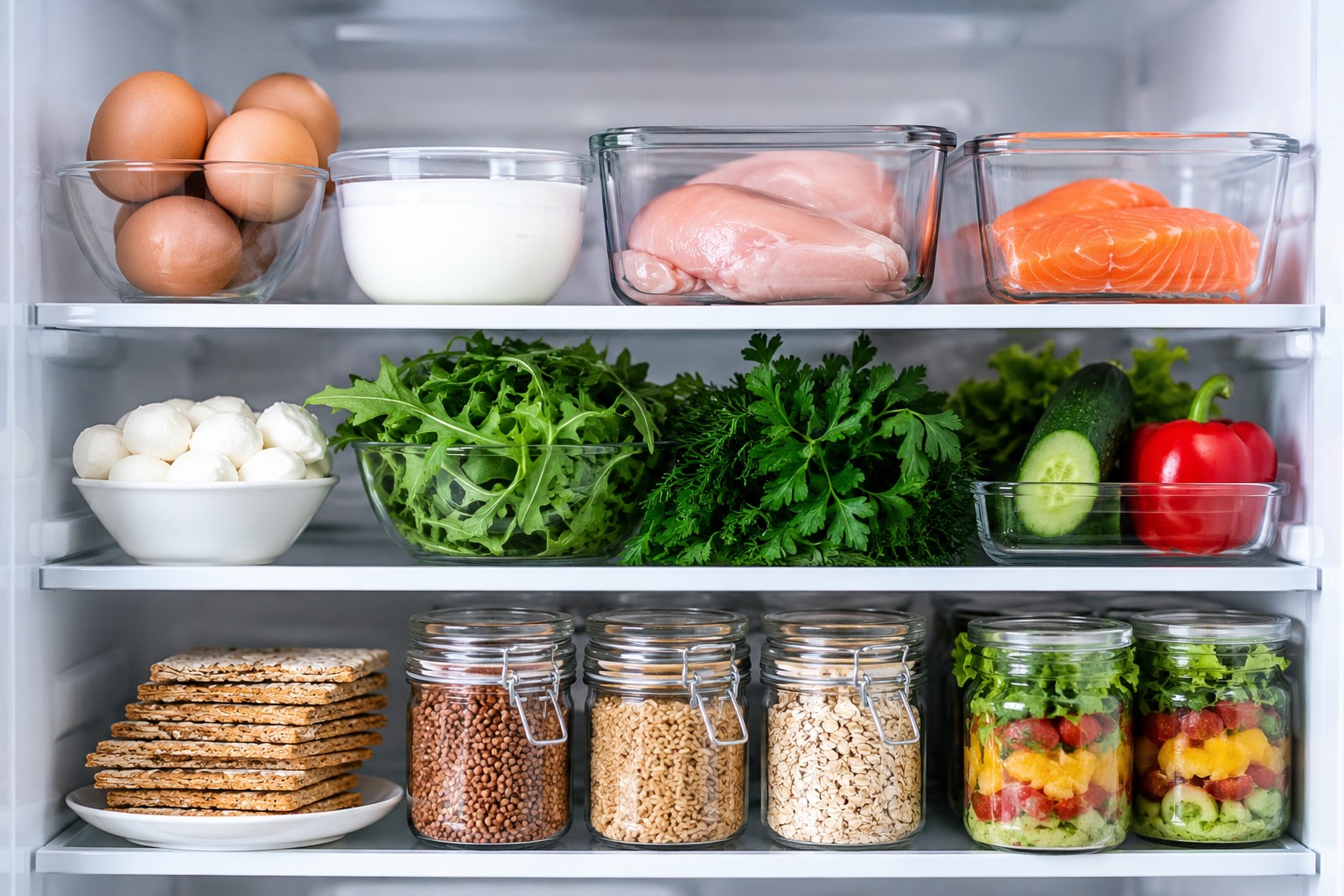
Many people believe that healthy eating requires complicated planning, long shopping lists, and spending hours in the kitchen every day. In reality, the main secret of a balanced diet is much simpler: a well-stocked basic grocery list.
The foods you keep at home often determine whether you choose a nutritious meal or reach for random snacks like cookies, processed meats, or fast-food delivery. If your refrigerator contains a few versatile staples, you can create dozens of healthy meals in just 10–15 minutes.
This approach is known as a modular menu — a system in which ready-to-use ingredients can be easily combined to create a variety of breakfasts, lunches, and dinners without becoming repetitive.
What Is a Modular Menu?
A modular menu works like a building-block system. Instead of relying on complex prepared dishes, you keep a selection of basic foods from different categories:
protein sources;
vegetables and leafy greens;
complex carbohydrates;
healthy fats;
dairy products.
By combining these components in different ways, you can quickly create new meals without constantly buying specialty ingredients.
For example:
eggs + vegetables + mozzarella = a quick omelet;
fish + grains + salad = a complete lunch;
Greek yogurt + berries = a healthy snack;
chicken + vegetables + whole-grain crispbreads = a light dinner.
That is why nutrition experts often recommend building a stock of versatile ingredients at home rather than planning every meal individually.
The Foundation of Your Grocery List: Eggs
Eggs are one of the most versatile foods you can include in your diet.
They provide high-quality protein with a complete amino acid profile, along with B vitamins, choline, selenium, and other important nutrients.
With eggs, you can prepare:
omelets;
scrambled eggs;
poached eggs;
casseroles;
salads with boiled eggs;
a high-protein breakfast in just a few minutes.
Boiled eggs can be stored in the refrigerator for several days and often become a lifesaver during busy workweeks.
Greek Yogurt: A Quick Protein Source
Greek yogurt has long been a favorite among people who follow a balanced diet.
Its benefits include:
high protein content;
excellent satiety;
versatility;
low sugar content when choosing plain varieties.
Greek yogurt can serve as:
breakfast;
a snack;
a sauce base;
a salad dressing;
an ingredient for healthier desserts.
Add berries, fruit, or a handful of nuts, and you have a balanced meal in minutes.
Poultry: Your Main Protein Backup
Chicken and turkey rightfully deserve a place in every basic grocery list.
They provide plenty of protein while remaining relatively low in fat, especially when using lean cuts such as breast fillets.
A practical strategy is to cook several portions at once:
bake the fillets;
boil them;
grill them.
Prepared meat can then be used over the next few days for:
salads;
wraps;
sandwiches;
grain-based meals;
quick dinners.
Having a ready-to-eat protein source significantly reduces the temptation to order high-calorie convenience foods.
White and Red Fish
Fish helps diversify your diet while providing valuable nutrients.
White fish such as hake, pollock, and cod is typically lower in fat and works perfectly for light lunches and dinners.
Oily fish such as salmon and trout provide omega-3 fatty acids, which support normal heart and brain function.
For quick meals, it is enough to keep several portions of fish in the freezer. Baking or pan-cooking usually takes only 10–15 minutes.
Mozzarella: A Convenient Dairy Product
Mozzarella pairs well with:
vegetables;
eggs;
fish;
poultry;
whole-grain bread.
It adds flavor and satiety to meals while providing protein and calcium.
Keeping small mozzarella balls or reduced-fat varieties in the refrigerator is especially convenient.
Greens and Vegetables: The Foundation of Volume and Fiber
Vegetables help make meals more filling without dramatically increasing calorie intake.
It is helpful to regularly keep the following in your refrigerator:
cucumbers;
tomatoes;
lettuce leaves;
arugula;
spinach;
fresh herbs;
bell peppers.
Fiber promotes longer-lasting fullness and helps diversify your meals.
When vegetables are already available at home, preparing a salad takes just a few minutes.
Choosing the Right Crispbreads
Whole-grain crispbreads are often a convenient way to add complex carbohydrates to a meal.
When choosing them, pay attention to the ingredient list:
whole grains should be among the primary ingredients;
minimal added sugar;
minimal unnecessary additives.
Crispbreads pair well with:
eggs;
cheese;
fish;
vegetables;
homemade spreads and pâtés.
Whole Grains for Quick Side Dishes
There is no need to eliminate carbohydrates completely.
Excellent options for everyday meals include:
buckwheat;
bulgur;
oats;
brown rice;
quinoa;
whole-wheat pasta.
Cooking grains in advance for two or three days can save significant time and makes assembling balanced meals incredibly easy.
How This Grocery List Prevents Mindless Snacking
Most unplanned snacking is not caused by a lack of willpower but by a lack of convenient options.
When someone is hungry and only sweets or processed foods are available, the choice becomes obvious.
A well-stocked basic grocery list allows you to prepare a complete meal quickly:
omelet with mozzarella and herbs — 7 minutes;
Greek yogurt with berries — 2 minutes;
chicken and vegetable salad — 5 minutes;
fish with bulgur — about 10 minutes;
crispbreads with egg and vegetables — 3 minutes.
When healthy food is readily available, the desire for random snacks decreases significantly.
Conclusion
Healthy eating begins not with perfect motivation but with a well-organized refrigerator. Eggs, Greek yogurt, poultry, fish, mozzarella, greens, whole-grain crispbreads, and grains create a versatile foundation for dozens of simple meals.
The more healthy ready-to-use foods you keep at home, the easier it becomes to maintain a balanced diet, control your appetite, and avoid impulsive choices that often interfere with long-term nutrition goals.