The Plate Formula: How to Easily Balance Every Meal Without a Kitchen Scale
Forget boring food weighing and obsessive calorie counting. We’re breaking down the legendary Harvard Plate Method and the Hand Portion Guide — a simple visual framework that helps you effortlessly balance protein, carbohydrates, and fiber by eye, no matter the situation.
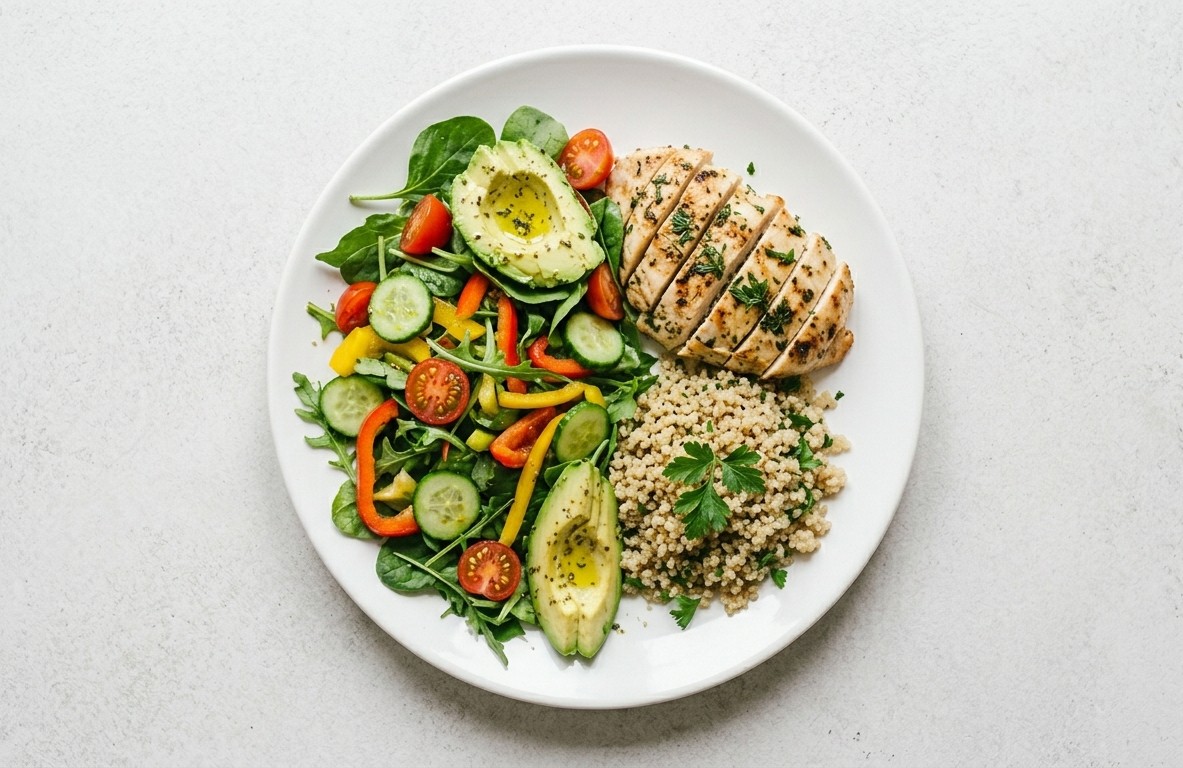
Imagine your ideal lunch. What does it look like? A juicy steak with roasted potatoes? A flavorful pasta dish? Or perhaps a large fresh salad? Now think about how often your attempts to eat “healthy” have turned these pleasant thoughts into tedious food weighing and obsessive calorie tracking in mobile apps.
Here’s the good news: you don’t need a kitchen scale to stay healthy, fit, and energized.
Nutrition experts have long relied on a simple, visual, and incredibly effective tool—the Harvard Healthy Eating Plate. Think of it as your personal compass in the world of nutrition, where the right balance is determined by what you see on your plate rather than by counting grams.
Let’s explore how this formula works and how you can adapt it to your own lifestyle.
Building the Perfect Meal: The 50/25/25 Rule
Take a standard dinner plate (approximately 20–22 cm or 8–9 inches in diameter) and mentally divide it in half. Then divide one of those halves in half again. You now have three sections. Here's how to fill them:
🥦 50% of Your Plate: Fiber and Vitamins (Vegetables, Greens, and Fruits)
This is the foundation of satiety, digestive health, and overall well-being. The more colorful and diverse this section is, the better.
What to include: Tomatoes, cucumbers, all types of cabbage (from broccoli to sauerkraut), zucchini, bell peppers, spinach, arugula, and other leafy greens.
A helpful tip: Try to make half of this portion raw vegetables and the other half cooked vegetables (roasted, steamed, or sautéed). Fruits and berries also count, but they are best enjoyed as dessert.
🍗 25% of Your Plate: Quality Protein (Your Body’s Building Blocks)
Protein helps keep you full for longer, supports muscle maintenance, and contributes to healthy skin, hair, and nails.
What to include: Chicken or turkey breast, fish (both lean and fatty varieties), veal, eggs, cottage cheese, or tofu.
For vegetarians: Legumes such as lentils, chickpeas, and beans are excellent sources of protein.
🥖 25% of Your Plate: Complex Carbohydrates (Energy)
Carbohydrates are the primary fuel source for both your brain and muscles. Forget the myth that carbs automatically cause weight gain. Weight gain comes from consistently eating more energy than your body needs. A quarter of your plate is an ideal portion that provides energy without leaving you feeling overly full.
What to include: Whole grains such as buckwheat, brown rice, quinoa, bulgur, and oats; whole-grain pasta; or baked potatoes (yes, potatoes can absolutely be part of a healthy diet).
What About Fats?
You may have noticed that fats do not have a separate section on the plate. That’s because they are often already present in your meal:
A tablespoon of olive oil or sunflower oil used to dress your salad.
A serving of baked salmon or a handful of nuts added to your oatmeal.
A quarter of an avocado, which pairs perfectly with almost any meal.
Important: Healthy fats are essential for hormone production and overall health, especially for women. Eliminating oils or butter entirely is not a good idea. Instead, focus on moderation—about 1–2 tablespoons of added fats per meal is generally sufficient.
The Hand Portion Method: Your Built-In Measuring Tool
If dividing your plate still feels complicated, use an even simpler method—your own hands.
A balanced meal portion looks like this:
Vegetables and greens: Two cupped hands.
Protein: One palm-sized portion (excluding the fingers), about the thickness of a deck of cards.
Carbohydrates: One fist-sized portion.
Fats: The size of your thumb (for example, a piece of cheese or a portion of butter).
This method works remarkably well because your hands are naturally proportional to your body size and individual nutritional needs.
Three Examples of a Perfect Plate
Breakfast
Scrambled eggs made with two eggs (protein + fats), two slices of whole-grain toast (carbohydrates), and a large salad of cucumbers, tomatoes, and spinach (fiber).
Lunch
Baked chicken breast (protein), cooked buckwheat (carbohydrates), and sautéed zucchini with broccoli drizzled with olive oil (fiber + fats).
Dinner
Baked hake or salmon fillet (protein + fats), roasted beetroot with leafy greens (fiber), and a few spoonfuls of quinoa (carbohydrates).
Why Does It Work?
When you start following the Plate Formula, something remarkable happens. The balanced combination of protein, healthy fats, fiber, and complex carbohydrates helps stabilize blood sugar levels throughout the day. As a result, sudden hunger cravings become less frequent, sugar cravings decrease, and your energy levels remain more consistent.
Try building your first balanced plate at your next meal. No stress, no scales, and no complicated calculations—just delicious food that supports your health and helps your body thrive.