Many people begin their weight-loss journey with strict restrictions. They cut out sugar, desserts, and their favorite baked treats, promising themselves they will never look at sweets again. For the first few days—or even weeks—everything seems to go well. But eventually, a strong craving for “something tasty” appears, followed by overeating, feelings of guilt, and a return to old habits.
That is why modern approaches to healthy eating are increasingly based on balance rather than deprivation. One of the most popular concepts is the 80/20 rule, which helps not only maintain a healthy weight but also build a positive relationship with food for years to come.
What Is the 80/20 Rule?
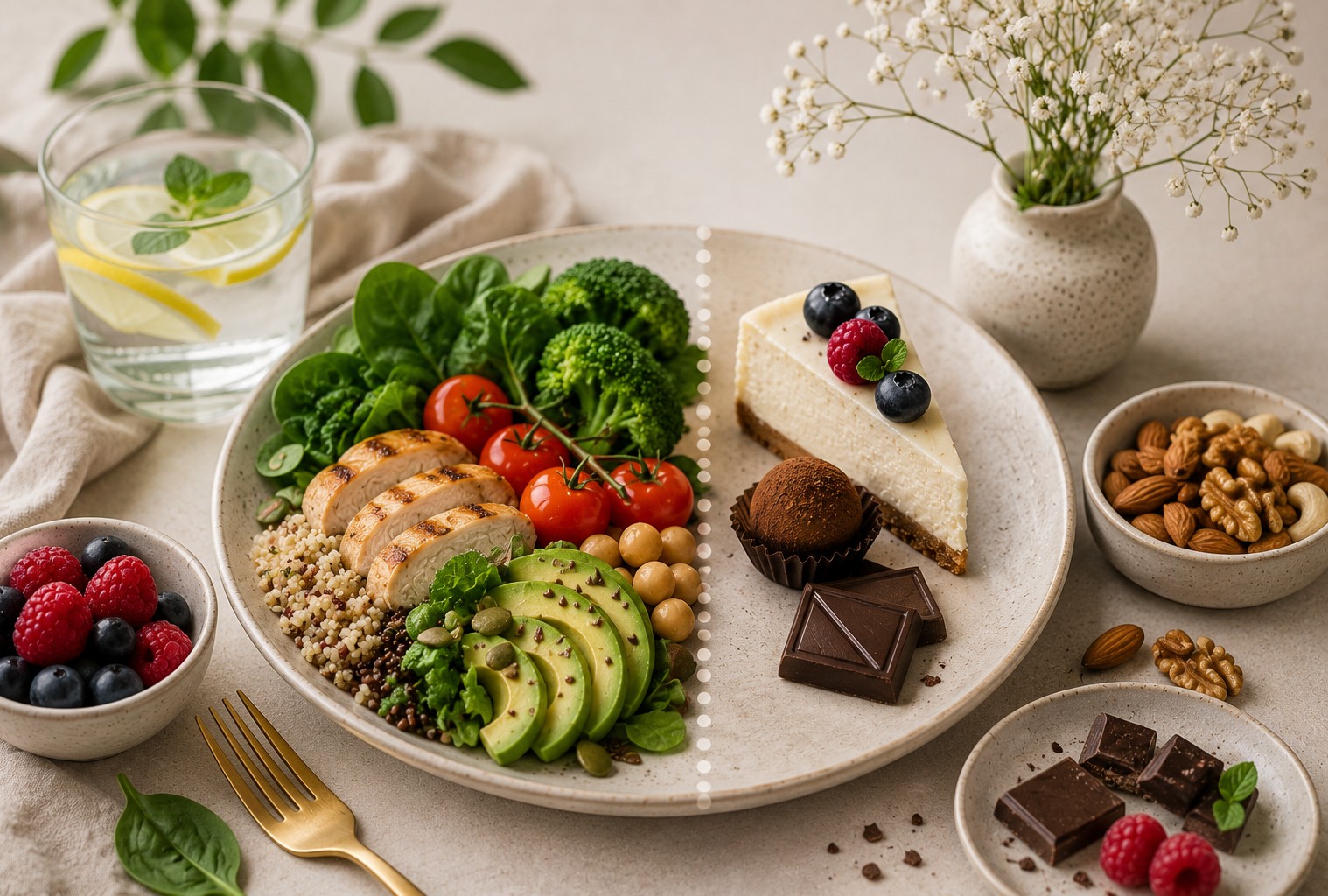
The principle is simple: approximately 80% of your diet consists of whole, nutrient-dense foods, while the remaining 20% is reserved for foods that bring enjoyment.
The foundation of the diet includes:
Lean meat, fish, and eggs
Dairy products
Vegetables and leafy greens
Fruits and berries
Whole grains and cereals
Healthy fats
These foods provide the body with protein, fiber, vitamins, minerals, and the energy needed for proper functioning.
The remaining 20% allows eating to remain enjoyable and psychologically sustainable.
Why Cutting Out Sweets Often Doesn't Work
The human brain does not respond to strict restrictions the way we would like it to. The more we forbid ourselves from eating a certain food, the more we tend to think about it.
Phrases such as “I can't eat sweets,” “I'm on a diet,” or “I'll start a new life tomorrow” create internal tension. As a result, dessert stops being just food and becomes an object of constant desire.
When a person suppresses cravings for a long time and eventually gives in, overeating often follows. This is usually accompanied by guilt, which triggers a new cycle of restriction and binge eating.
The 80/20 rule helps break this cycle. When dessert is not forbidden, it loses its excessive emotional significance.
The Secret to Long-Term Success
The main problem with most diets is not that they don't work. The problem is that they are difficult to maintain for years.
Weight loss is not a short-term project that lasts a few weeks. It is the process of building habits that can be sustained over time.
If a diet is too strict, sooner or later fatigue from constant restrictions will set in. When there is room for enjoyment, maintaining healthy habits becomes much easier.
This is why success is determined not by eating perfectly for a few days, but by making consistently good choices most of the time.
An Important Detail: 20% Doesn't Mean Junk Food
Many people mistakenly believe that the 80/20 rule means regularly eating large amounts of fast food, sugary soft drinks, or highly processed desserts.
In reality, that 20% can be used much more wisely.
Modern healthy eating offers plenty of dessert options that combine enjoyment with nutrition, including:
Cottage cheese desserts with berries
Cheesecakes made with high-protein soft cheese
Greek yogurt chocolate mousse
Homemade nut-based energy bites
Berry jellies
Oatmeal cookies with reduced sugar
High-protein desserts
These treats can provide protein, fiber, calcium, healthy fats, and other valuable nutrients often lacking in traditional store-bought sweets.
Why Desserts Can Actually Support Weight Loss
At first glance, it may sound paradoxical, but moderate portions of favorite desserts can genuinely support a healthy eating plan.
When people know they do not have to give up sweets forever, they experience less psychological stress. This reduces the likelihood of binge eating, emotional eating, and diet relapse.
In addition, a beautifully presented dessert offers not only taste satisfaction but also emotional enjoyment. This helps create positive associations with a healthy lifestyle rather than making it feel like a punishment.
How to Apply the 80/20 Rule in Practice
To make this principle work, keep a few simple guidelines in mind:
Build the foundation of your diet around nutrient-dense foods.
Avoid saving desserts for moments of extreme hunger.
Choose high-quality treats that you genuinely enjoy.
Eat desserts mindfully and without rushing.
Do not punish yourself for enjoying treats with excessive exercise or fasting.
Healthy eating should be both nourishing and enjoyable.
Conclusion
The secret to successful weight loss is not perfection—it is balance. The 80/20 rule demonstrates that achieving and maintaining a healthy weight does not require constant restriction or a battle with yourself.
When quality foods form the foundation of your diet and a small portion is reserved for your favorite desserts, eating becomes comfortable, varied, and realistic in the long term.
Sometimes, allowing yourself to enjoy sweets without guilt is exactly what helps you stay on track longer than any strict diet ever could.
Автор
Mealora Editorial